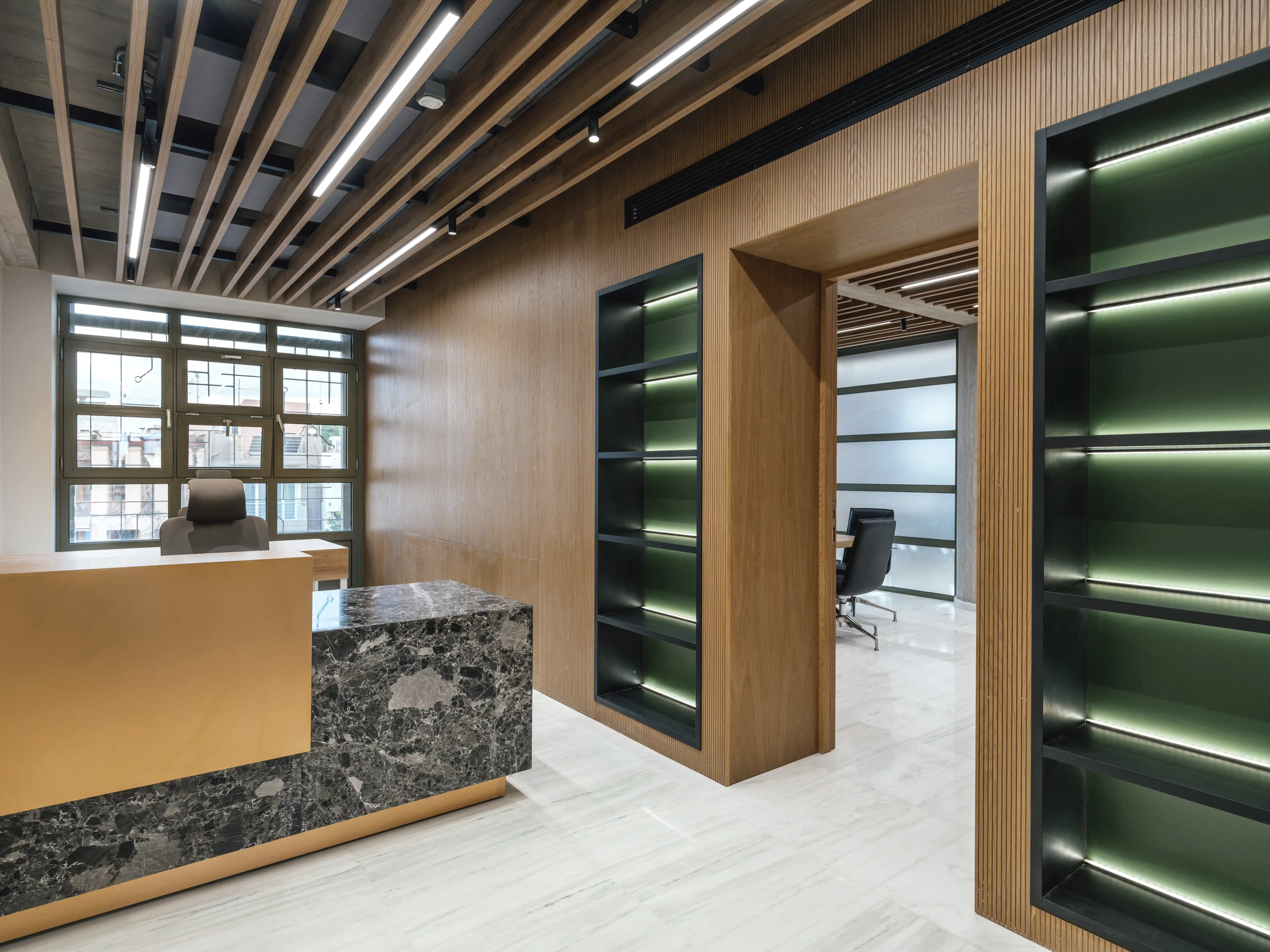
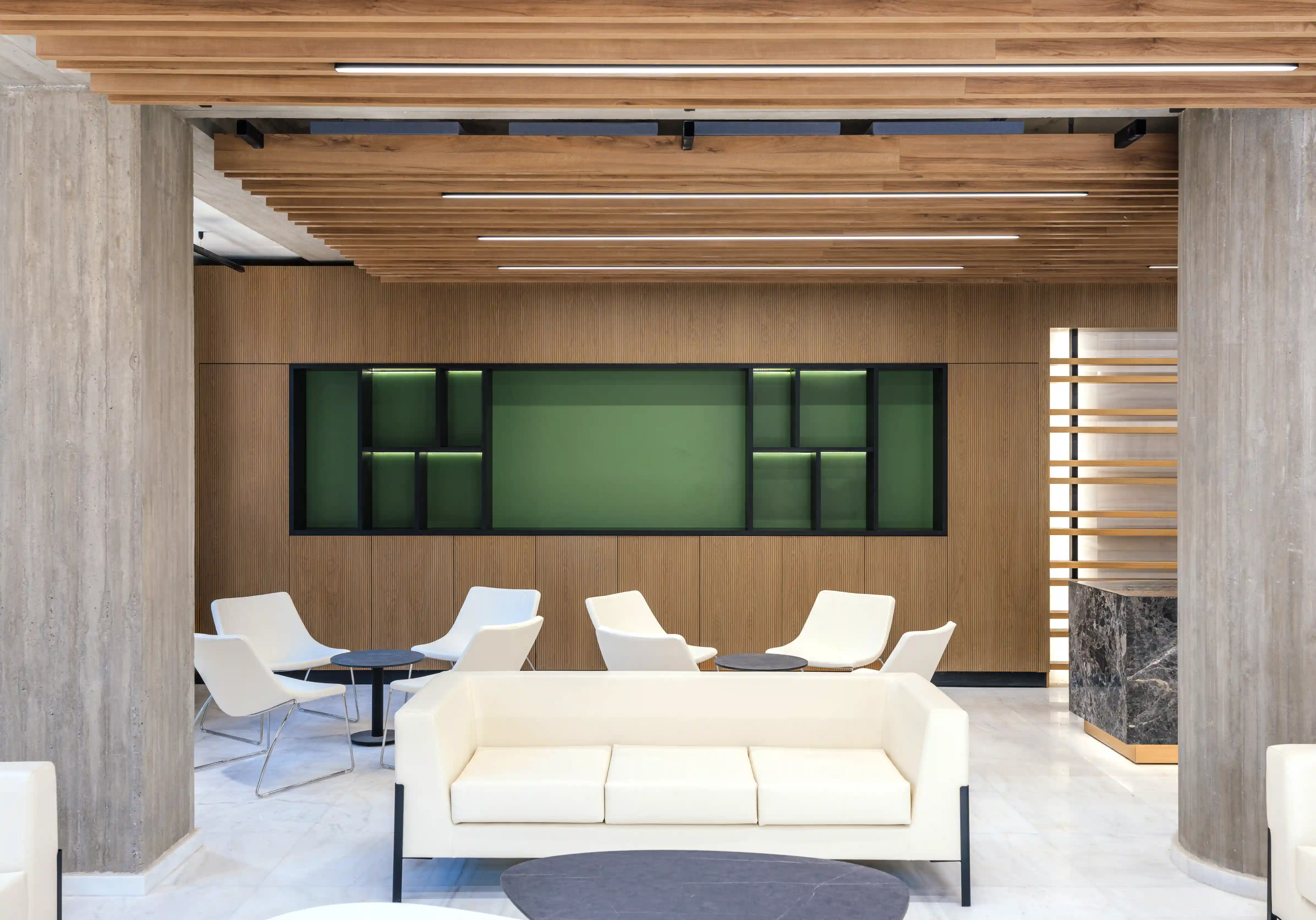
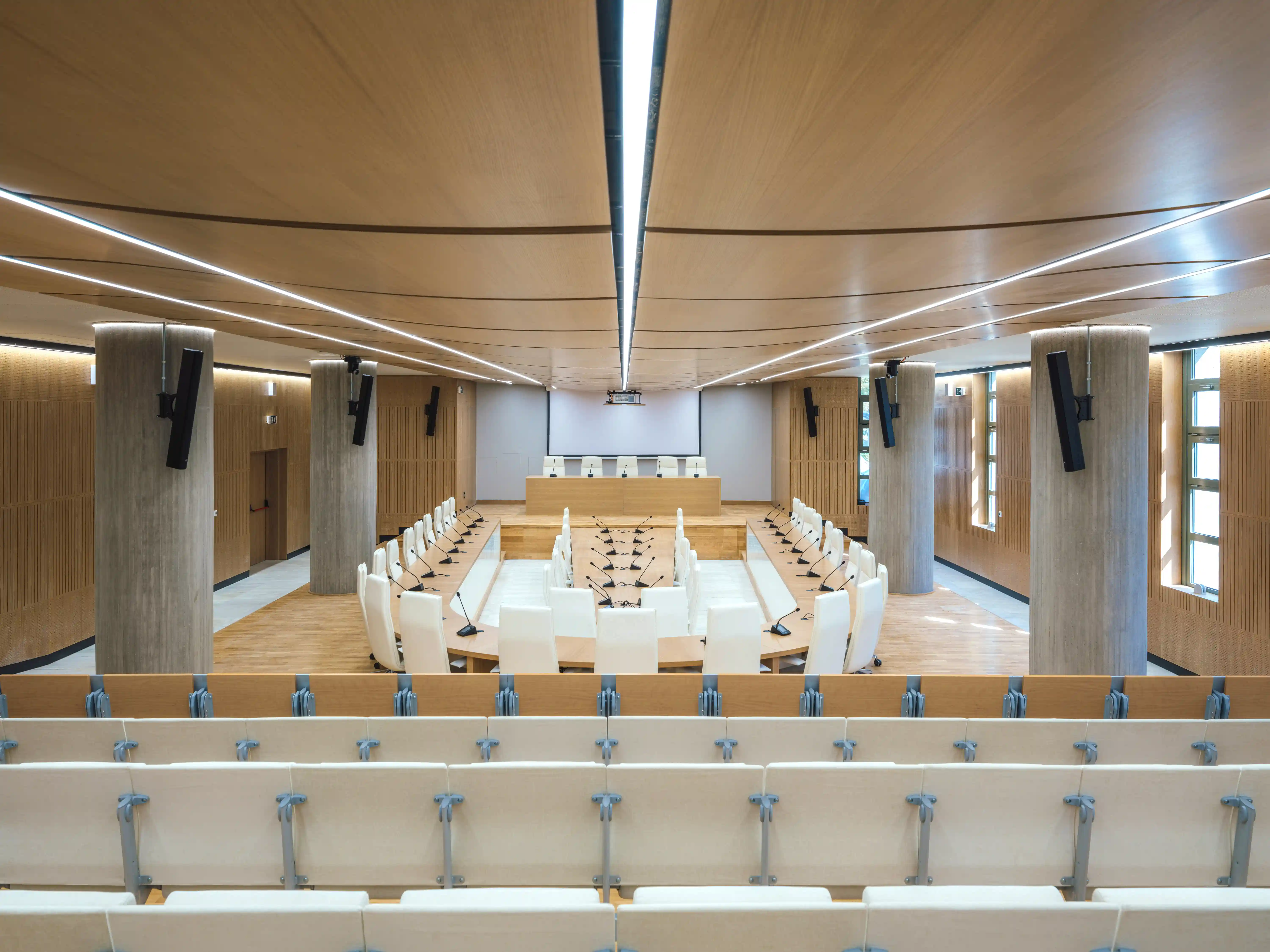
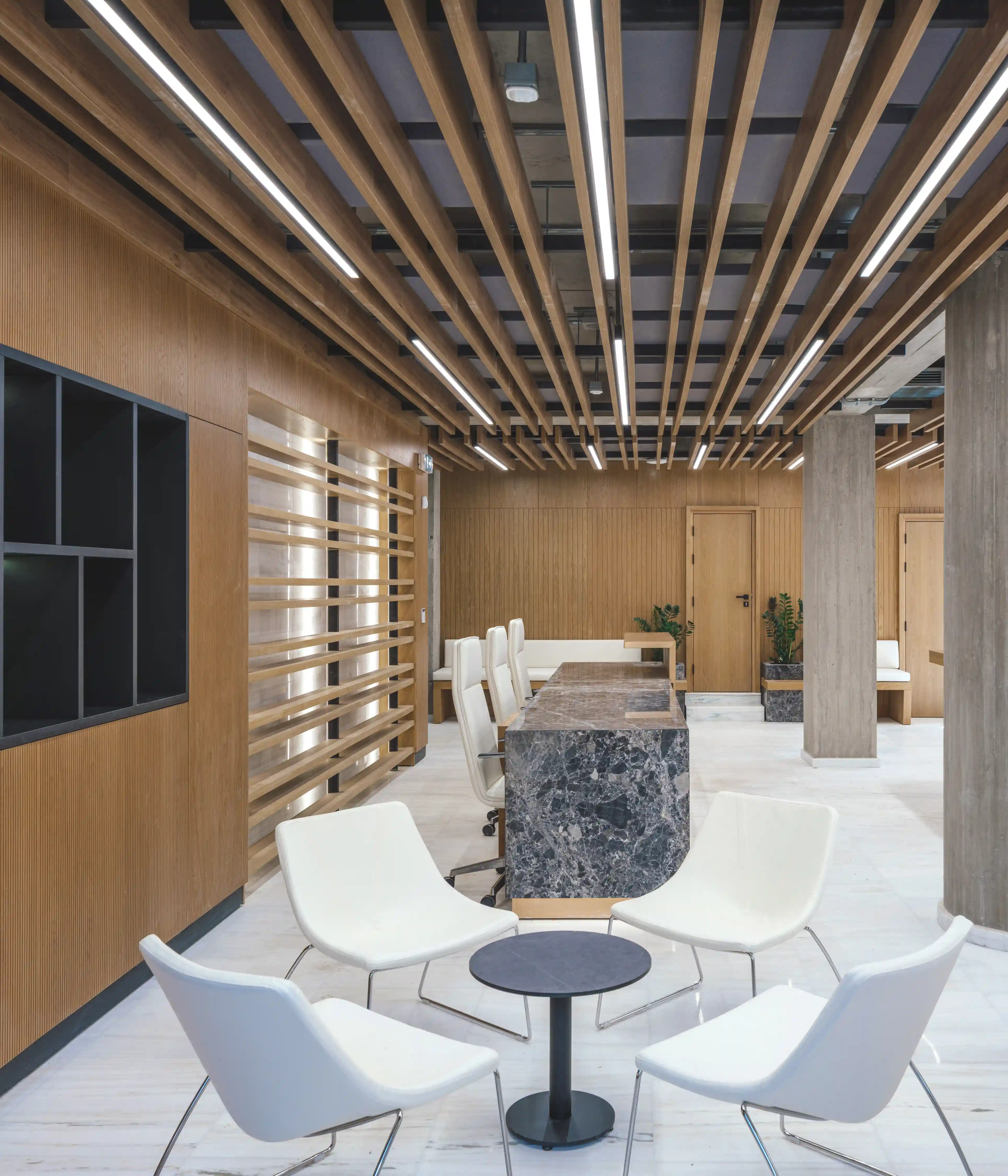
Located in the Lakkos district of Heraklion, the administrative headquarters of the Region of Crete brings together regional government functions within a civic building. The interior design reconsiders the character of institutional workplaces, balancing the permanence expected from a public institution with a more open and human-centered spatial experience.
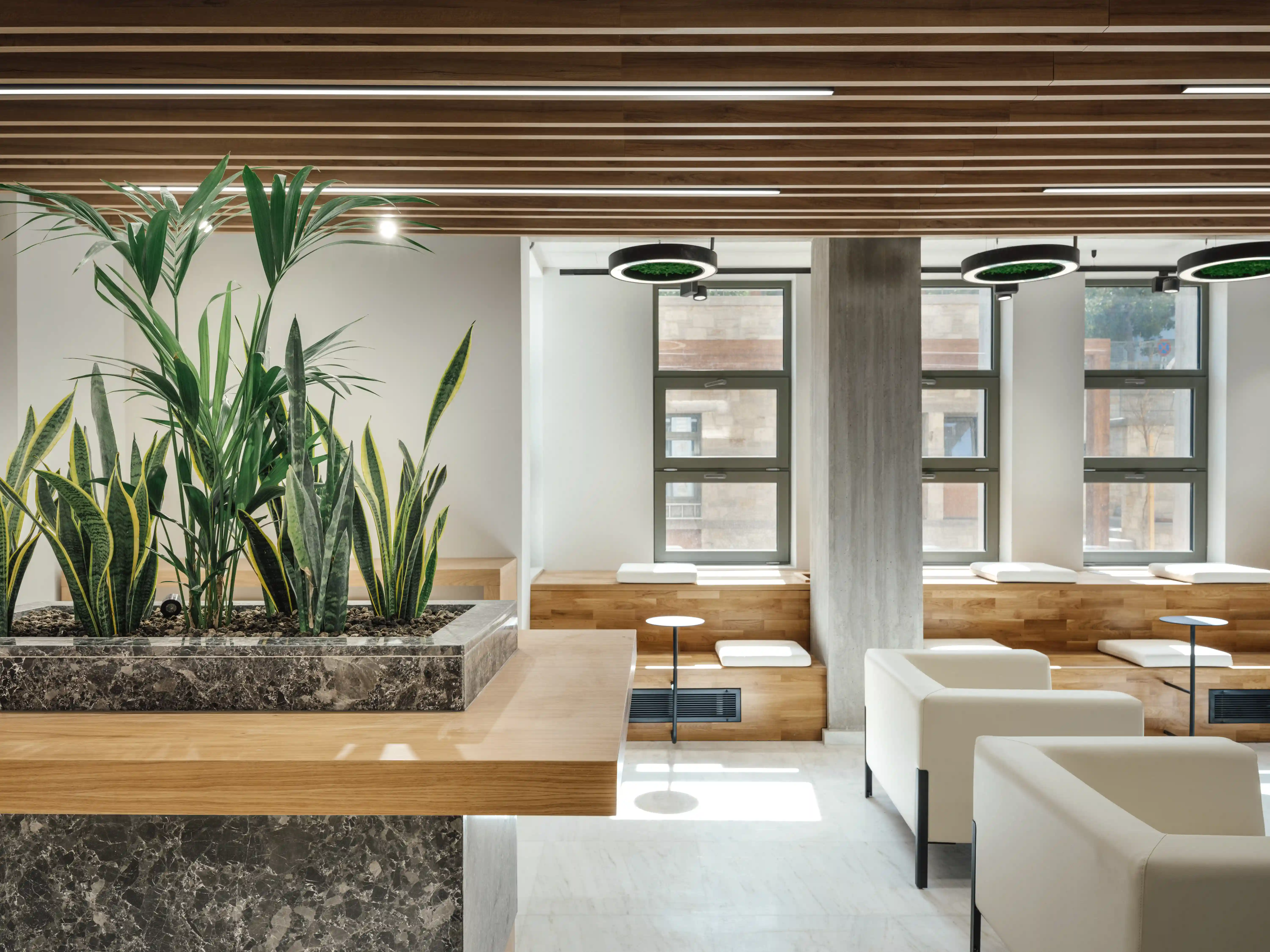
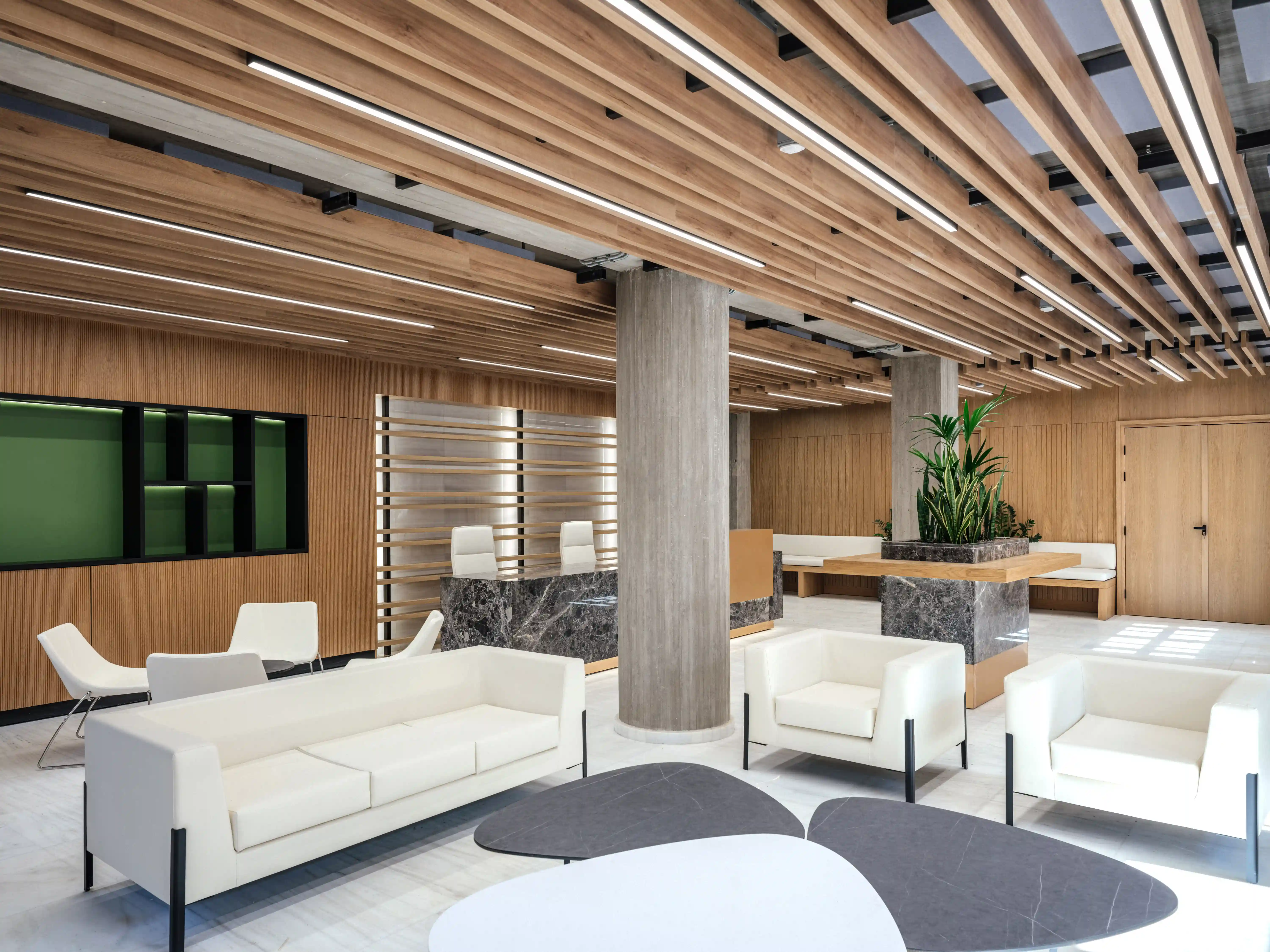
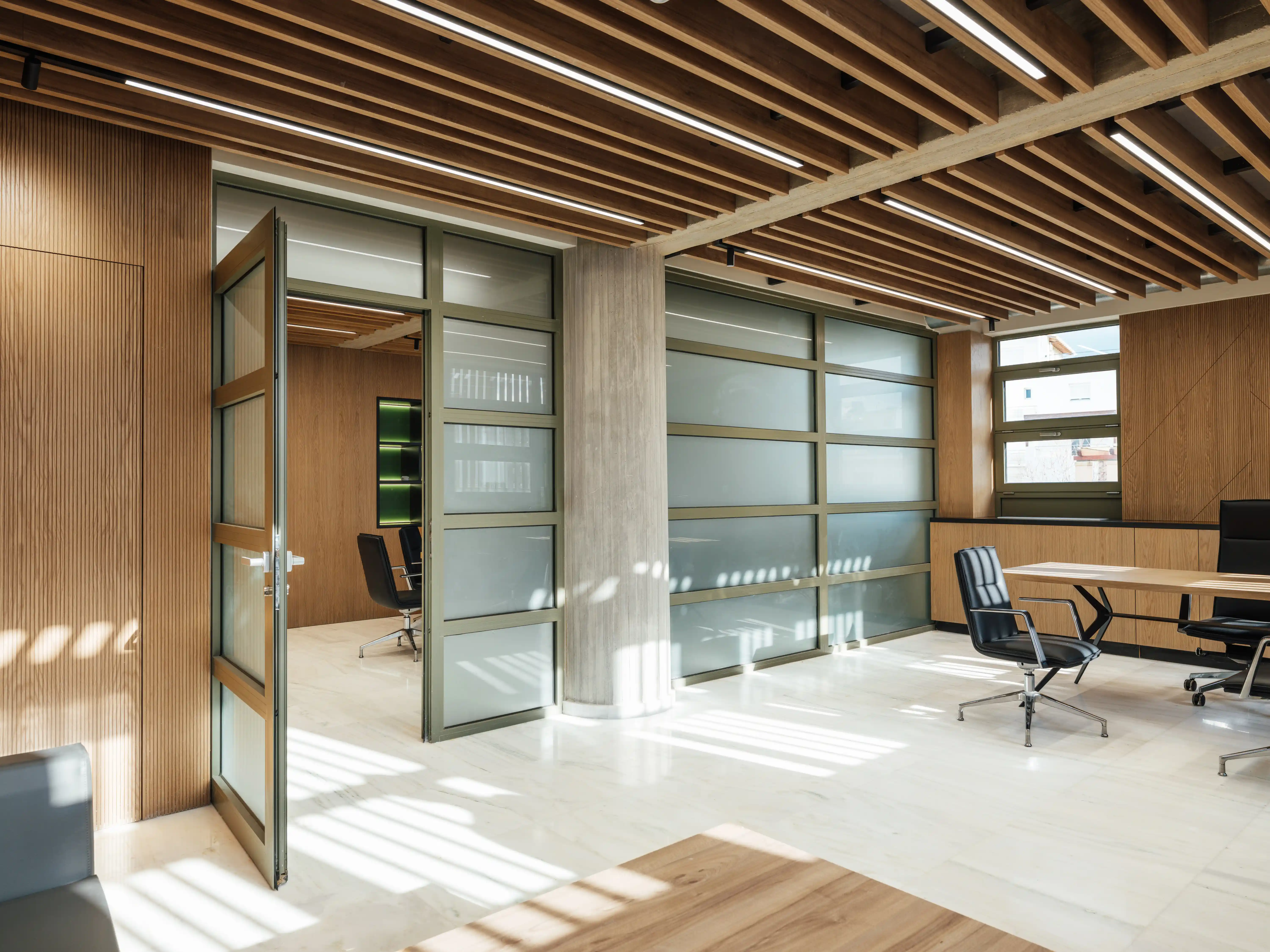
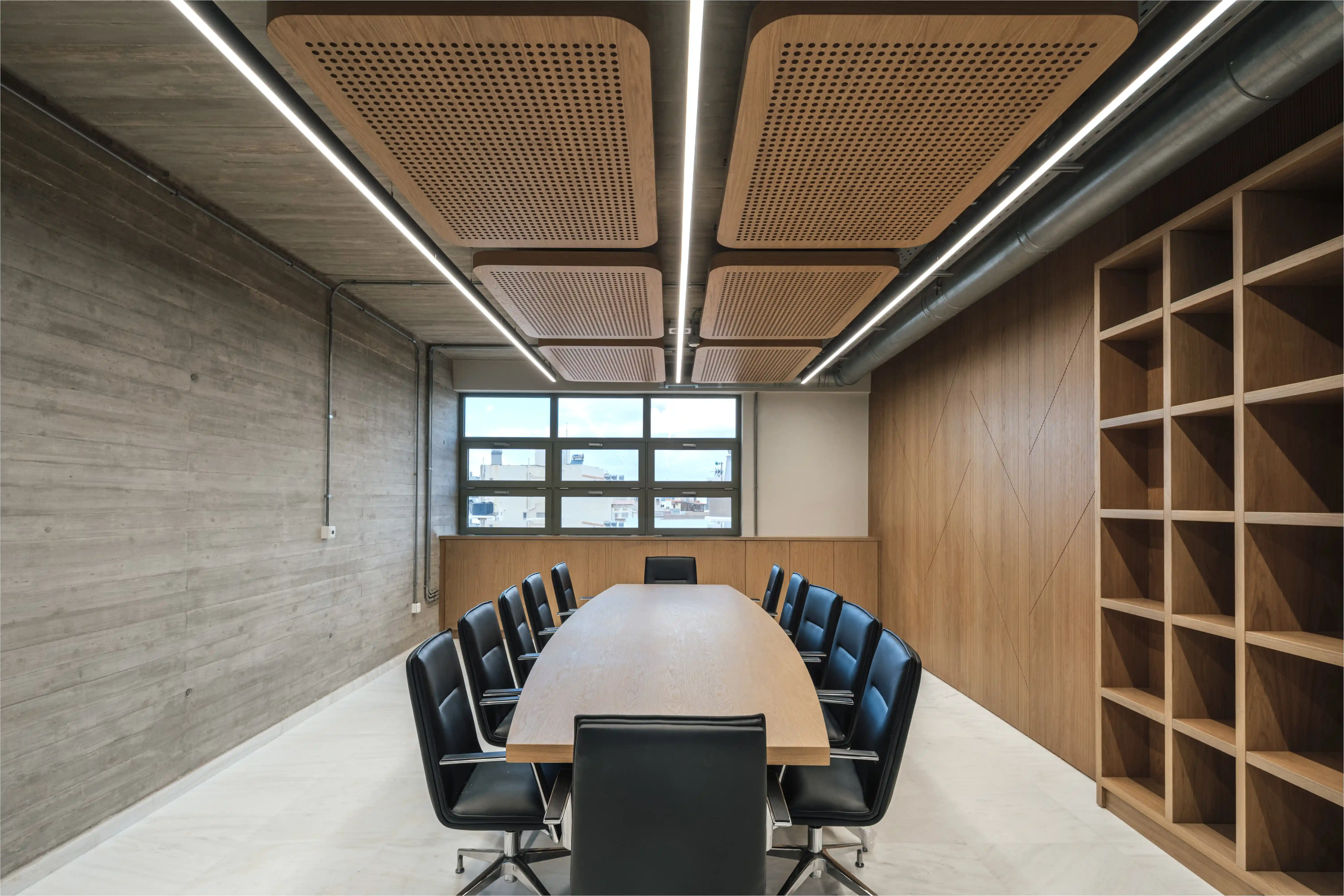
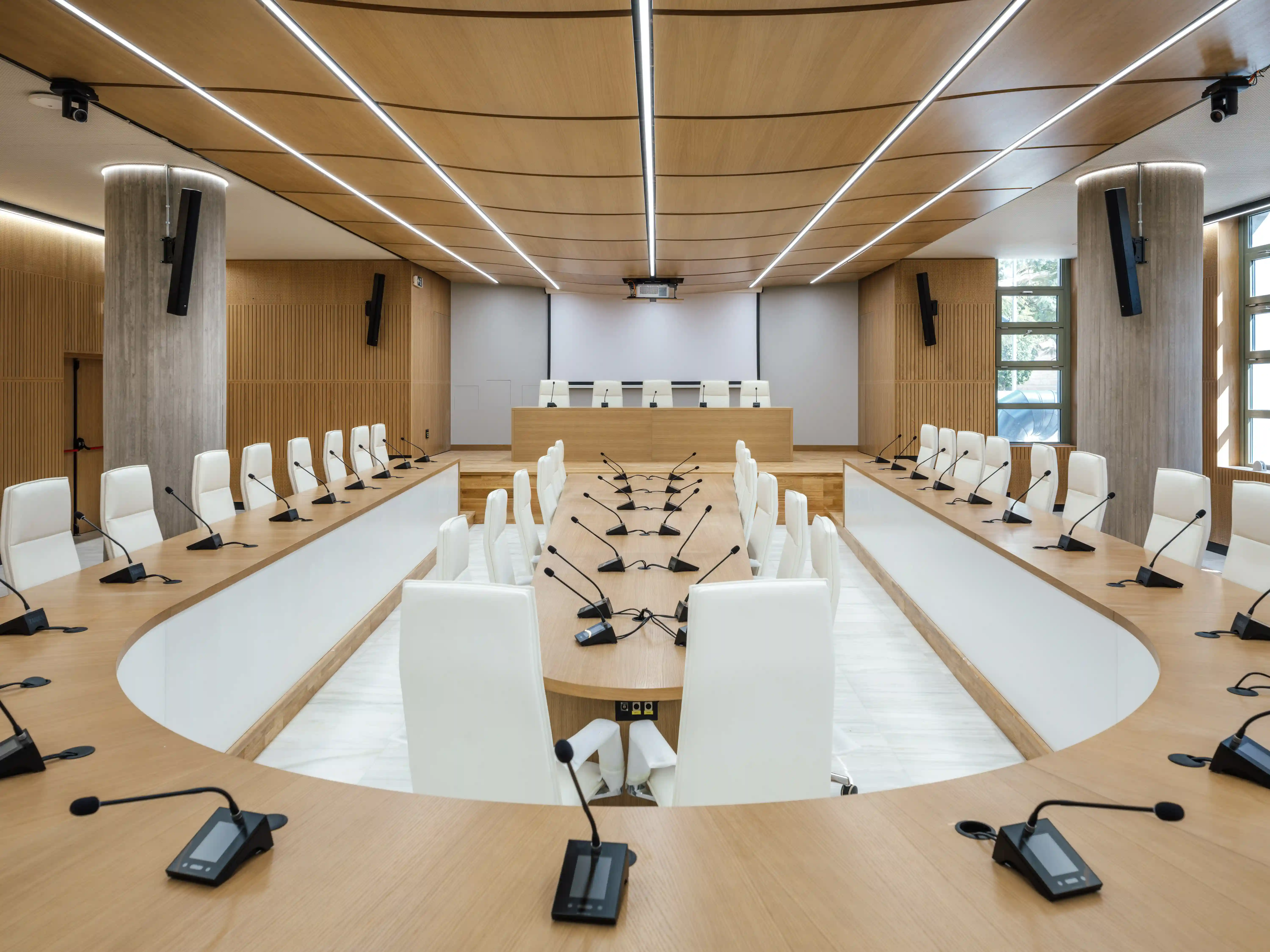
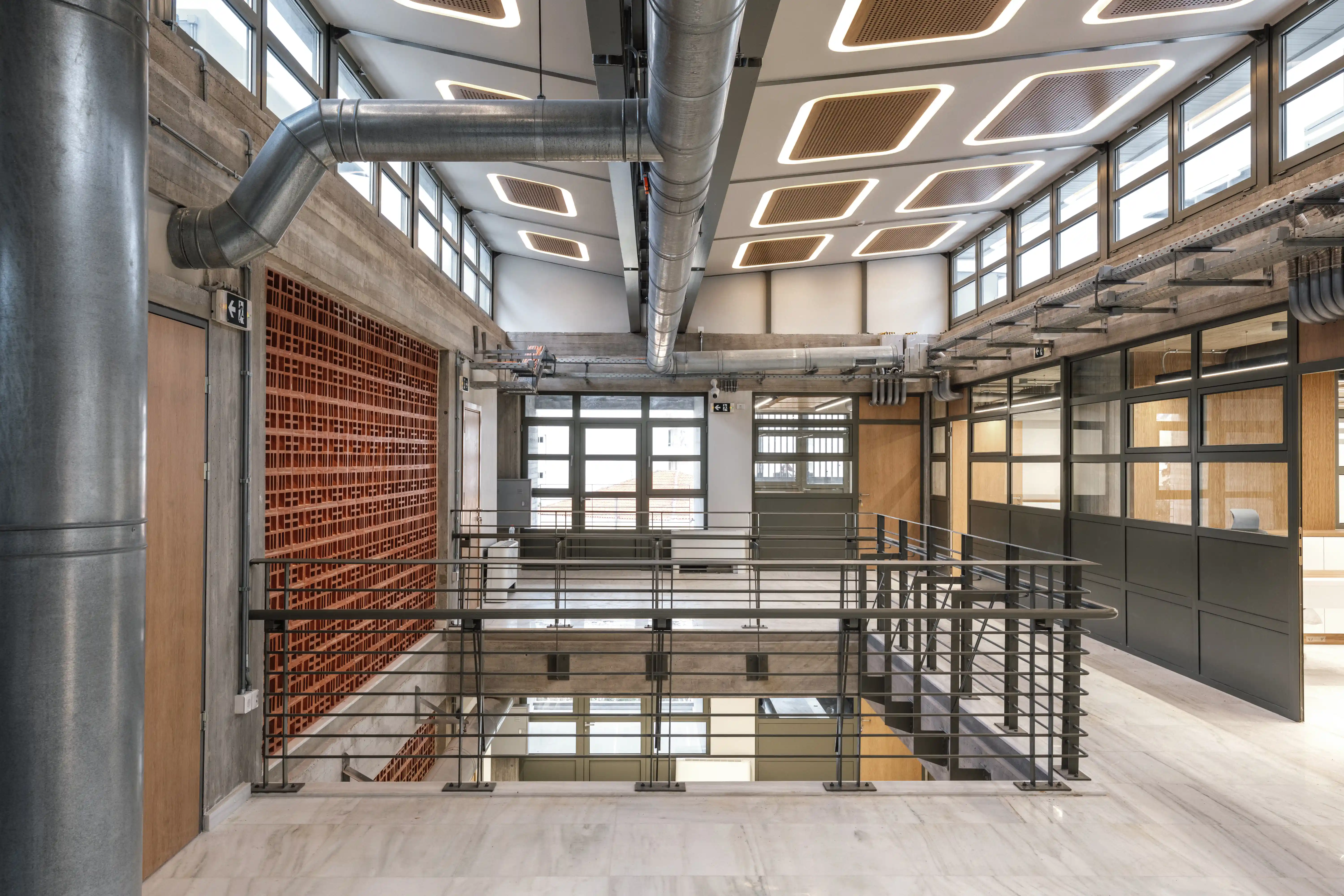
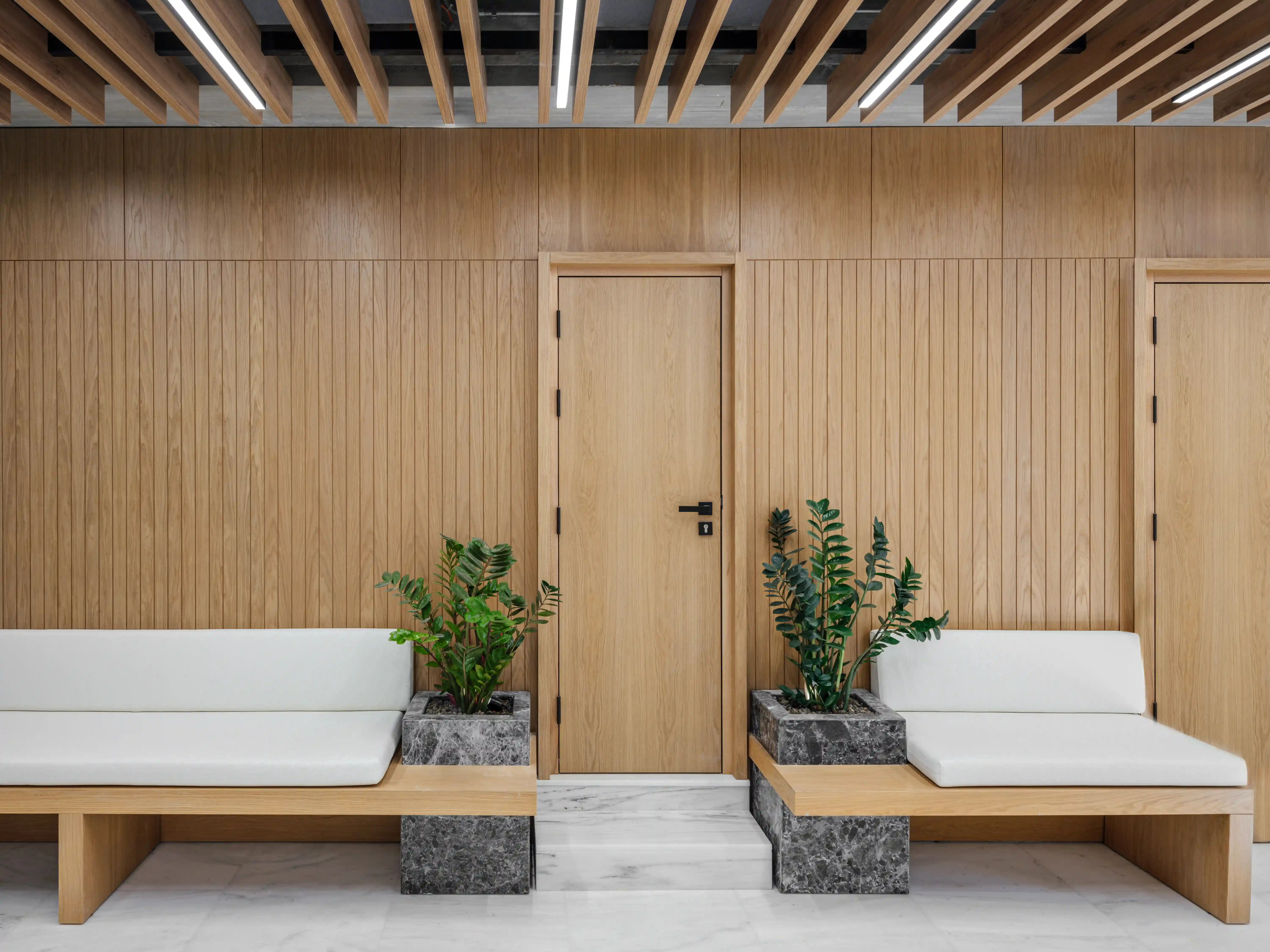
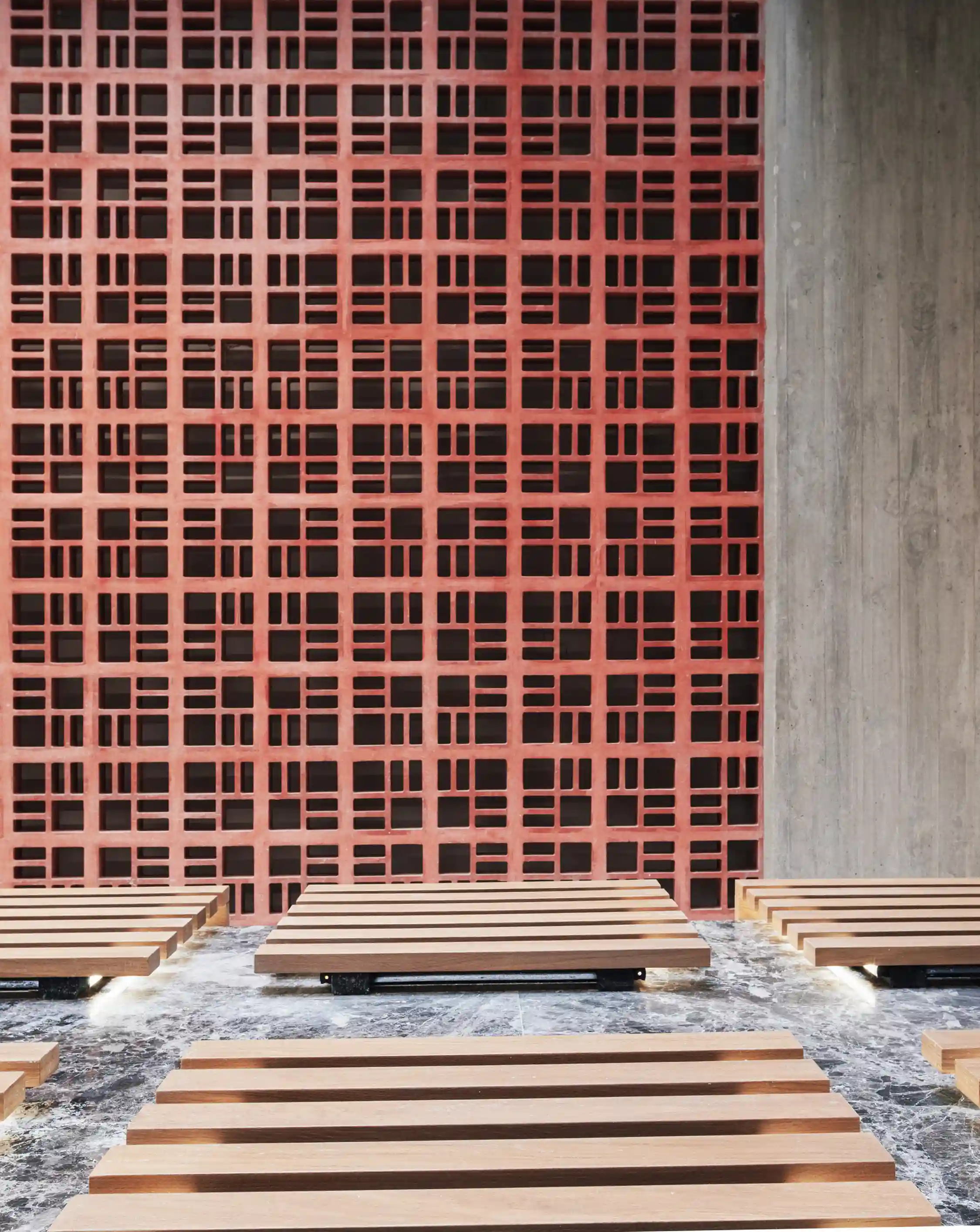
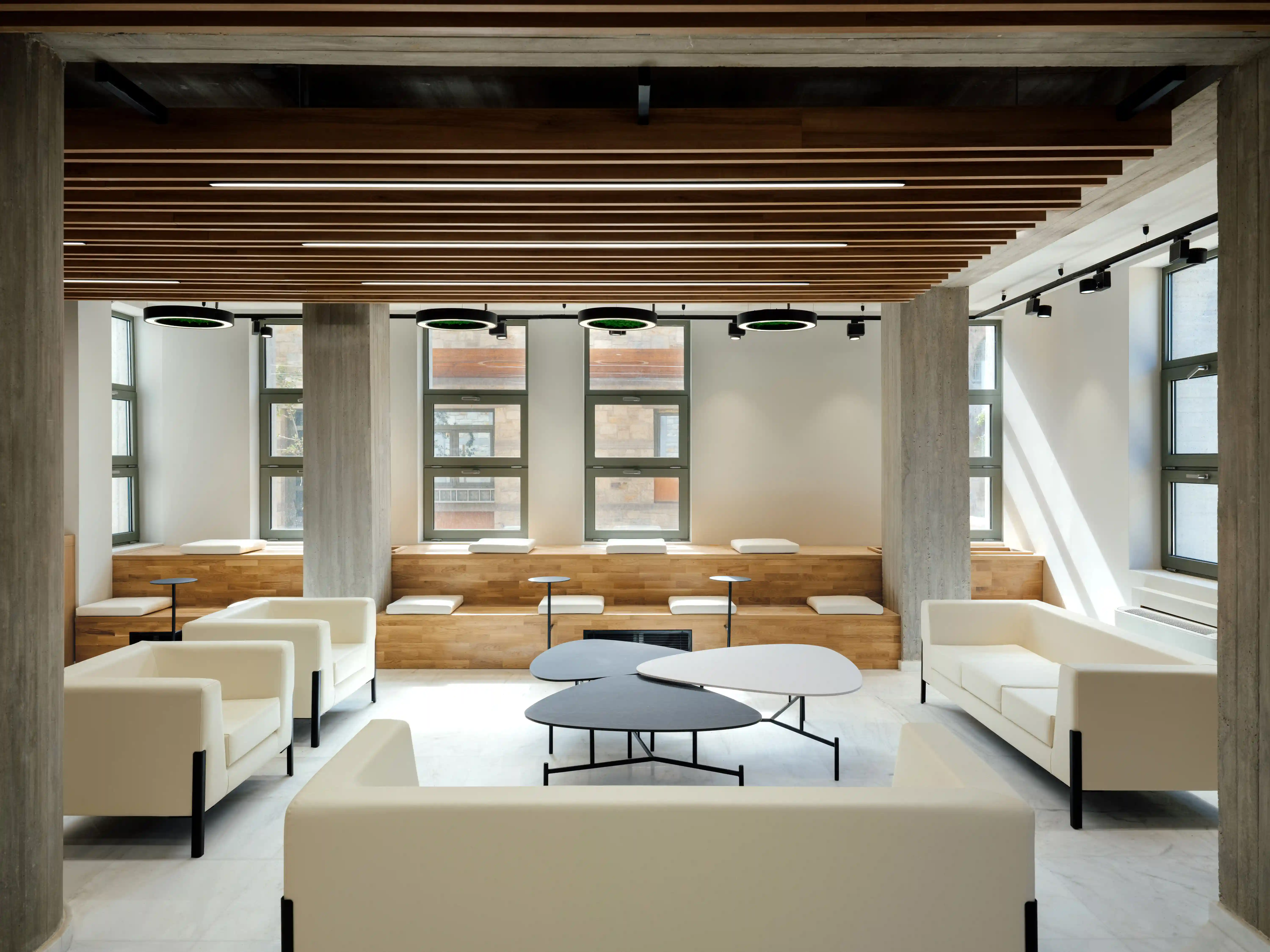
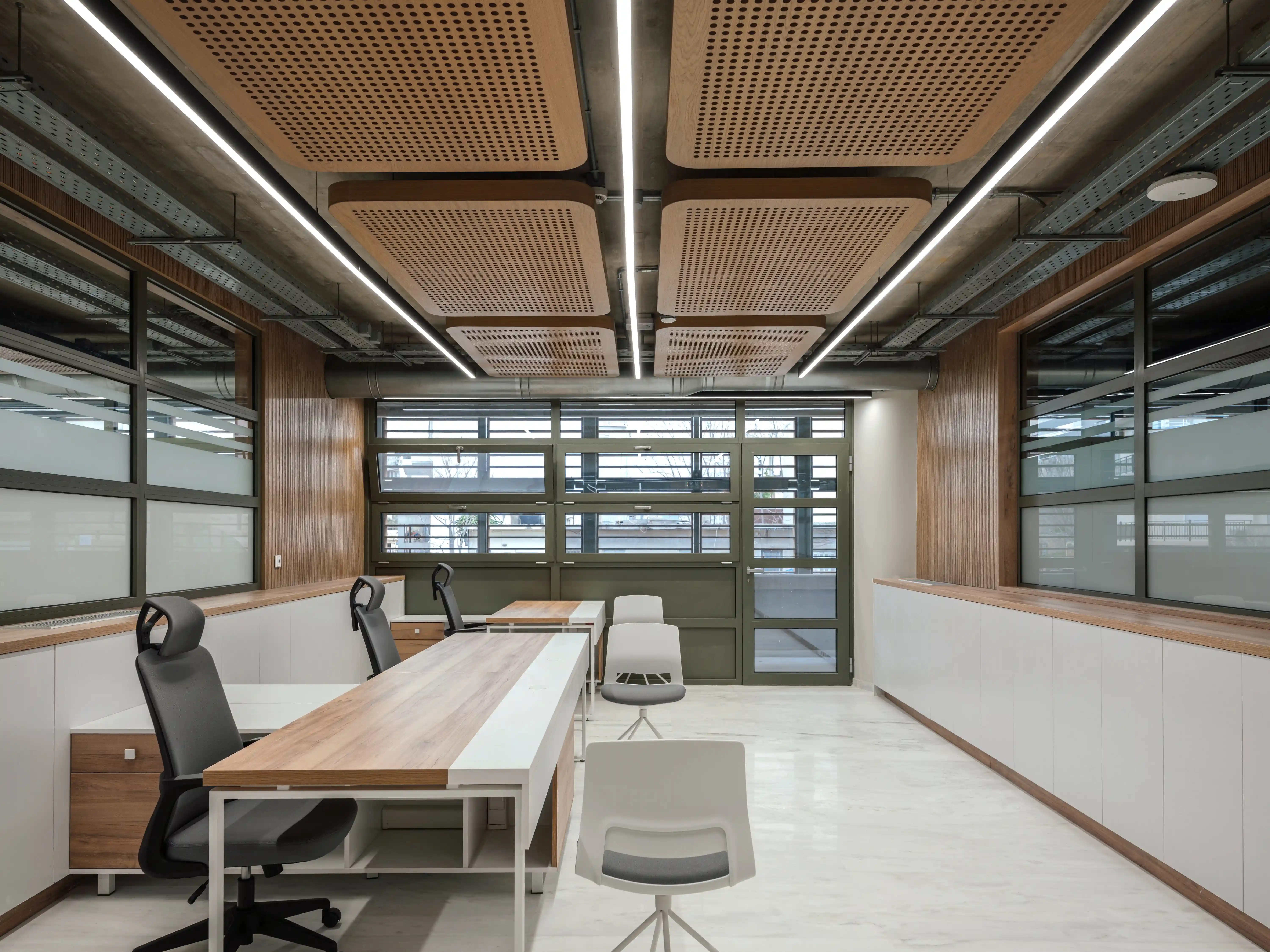
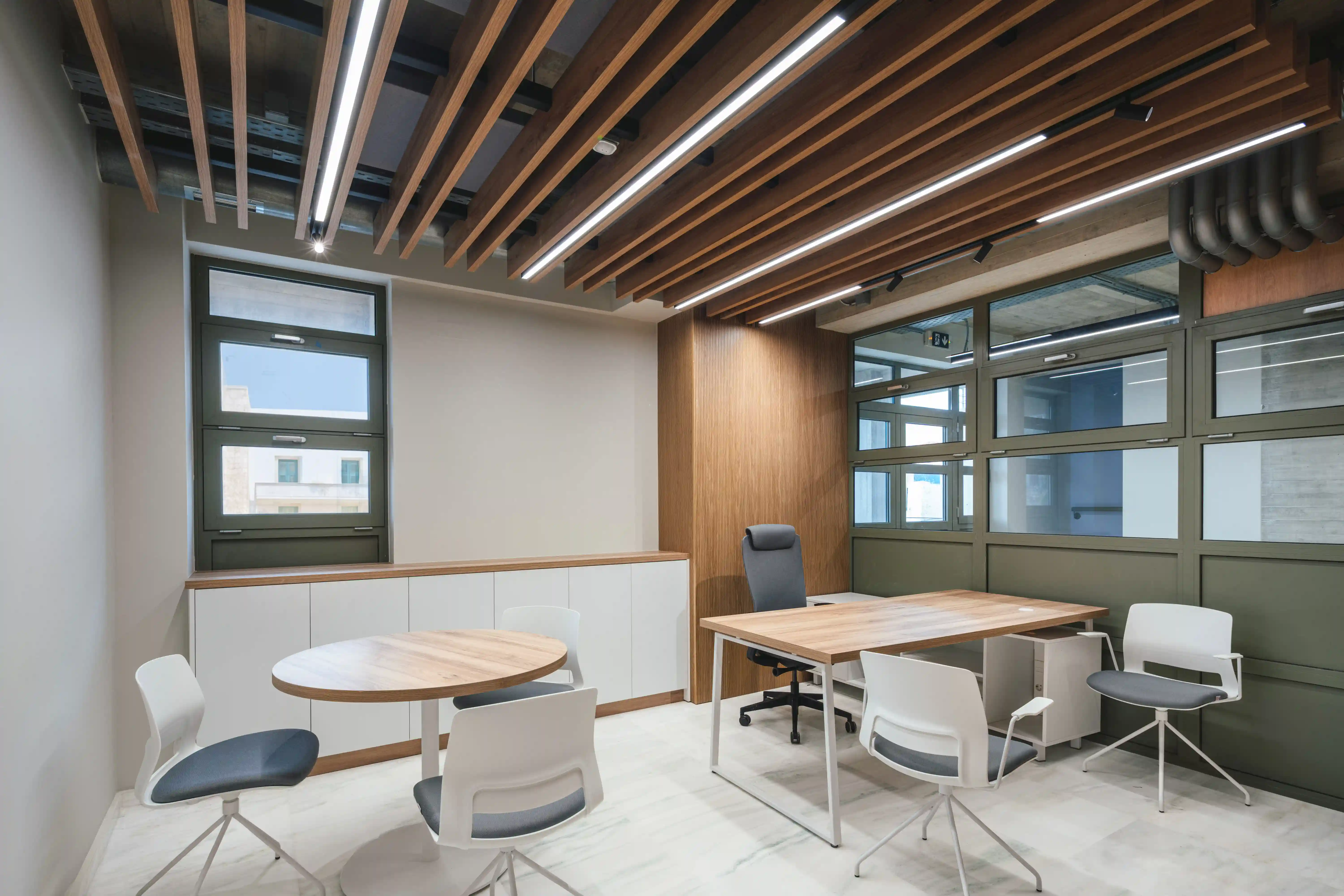
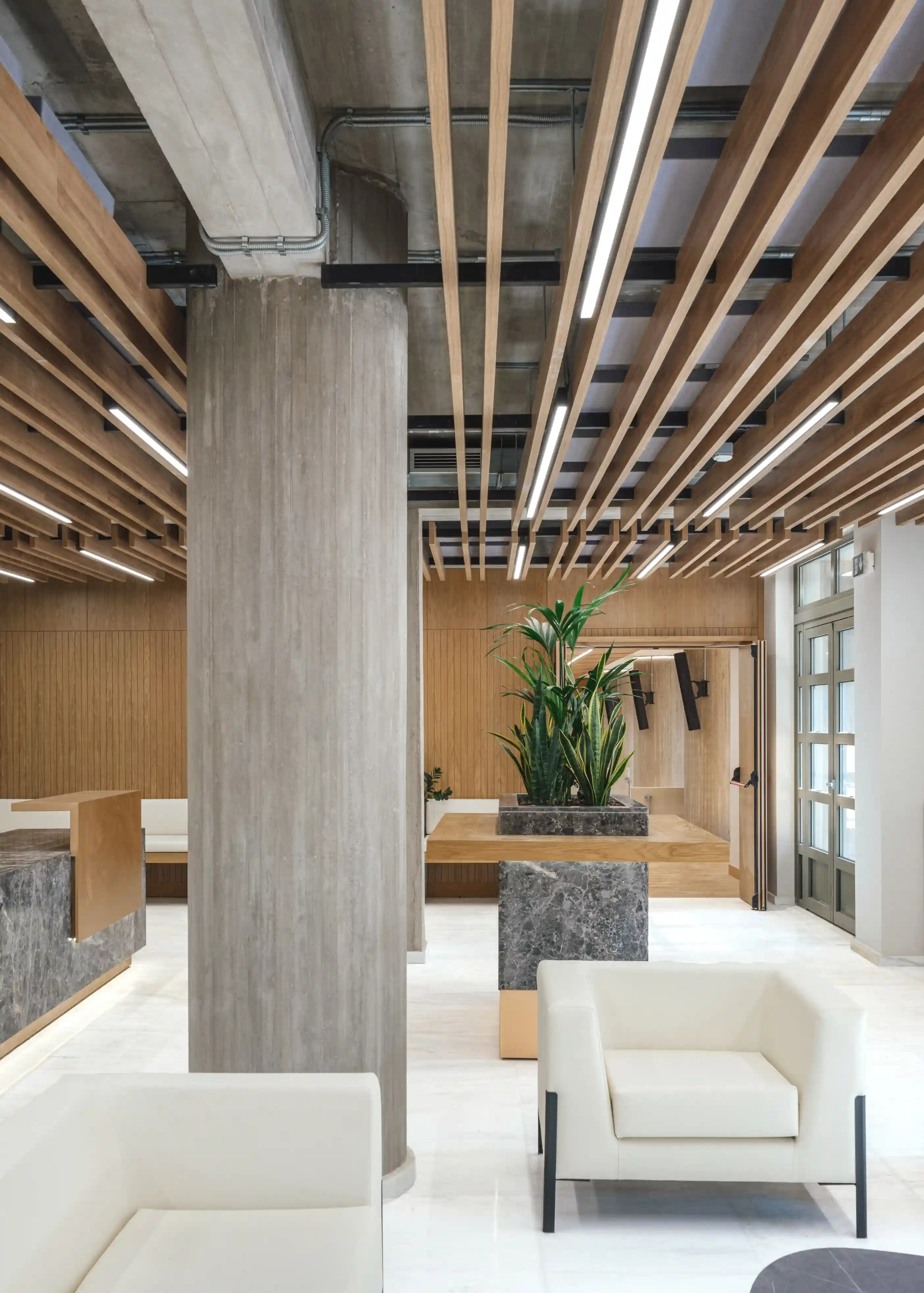
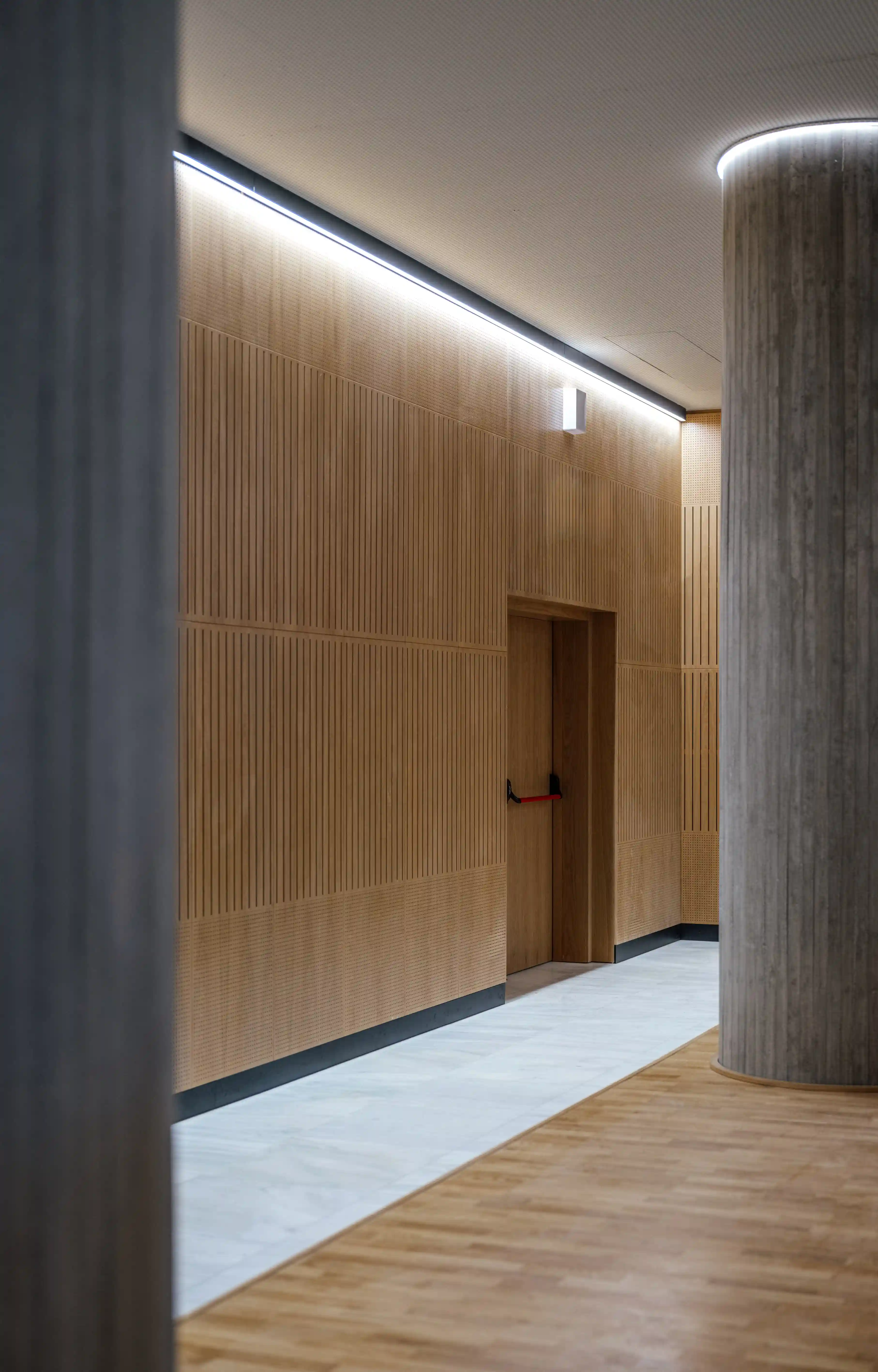
The architectural language of the building is defined by exposed concrete and a clear industrial expression. Rather than softening this condition, the interior design works alongside it, introducing a palette of wood, marble, steel, and controlled color accents that establish a dialogue between raw structure and crafted elements. The ground floor forms the public interface of the building, accommodating reception, lounge areas, and facilities organized around collaboration and conference spaces. Custom-designed furniture and built-in elements establish a spatial identity across the building while adapting to the needs of each space.
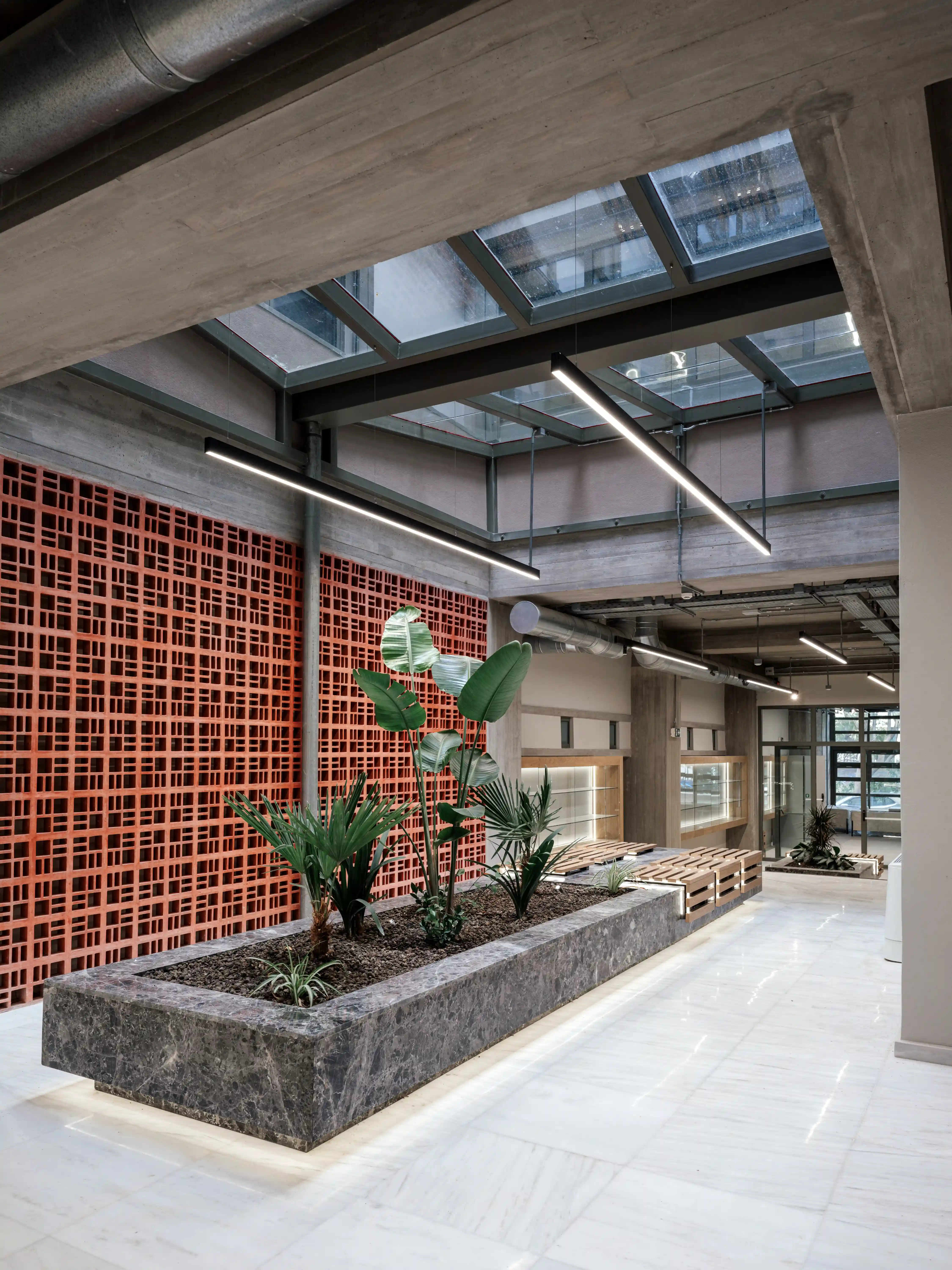
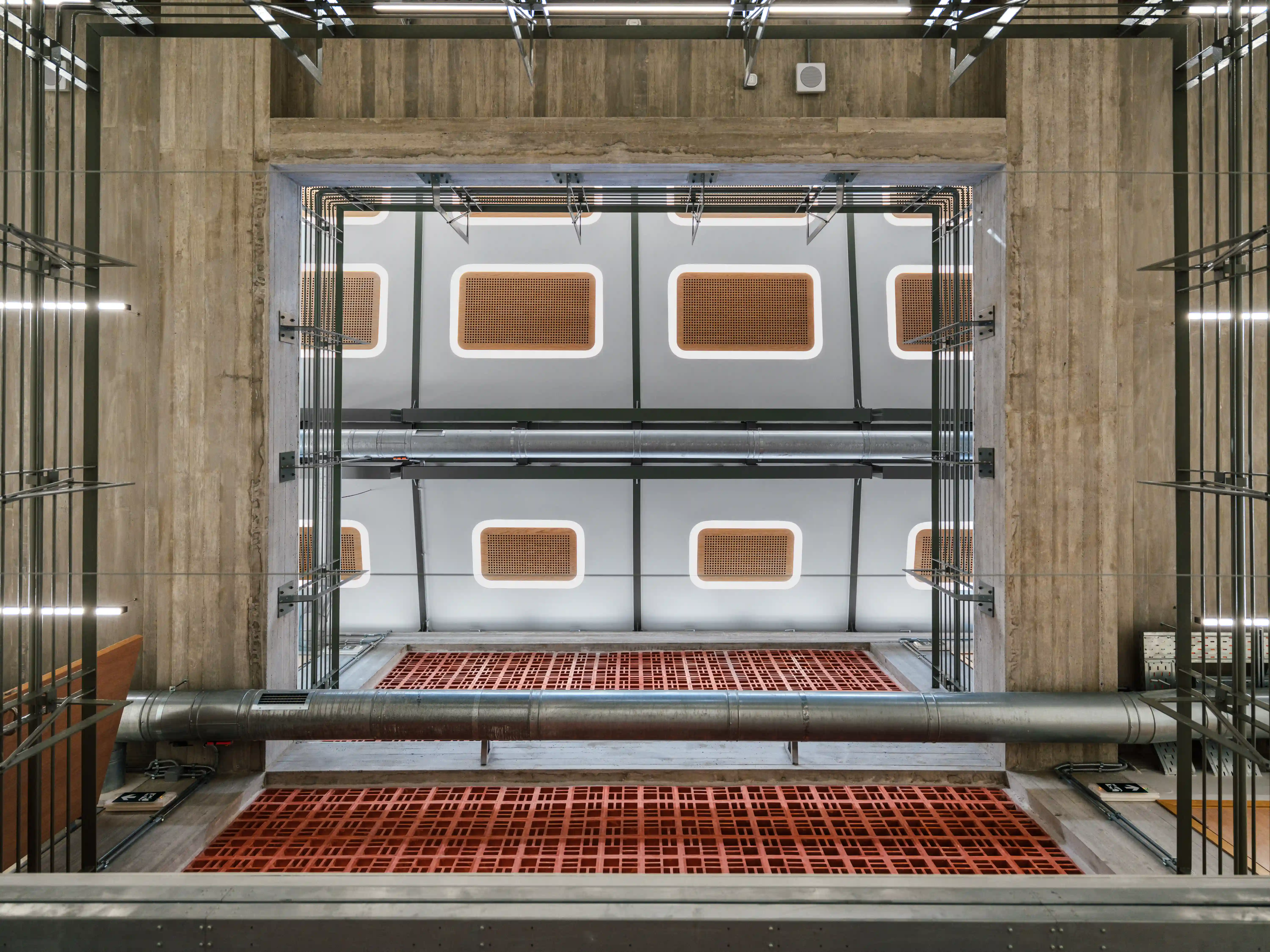
Vertical voids bring natural light into the interior and create visual connections between levels. A skylit space at the ground floor combines planting, seating platforms, and public display shelving, forming a transitional environment between circulation and gathering, while another void connects the office levels and strengthens spatial continuity across the workplace floors.
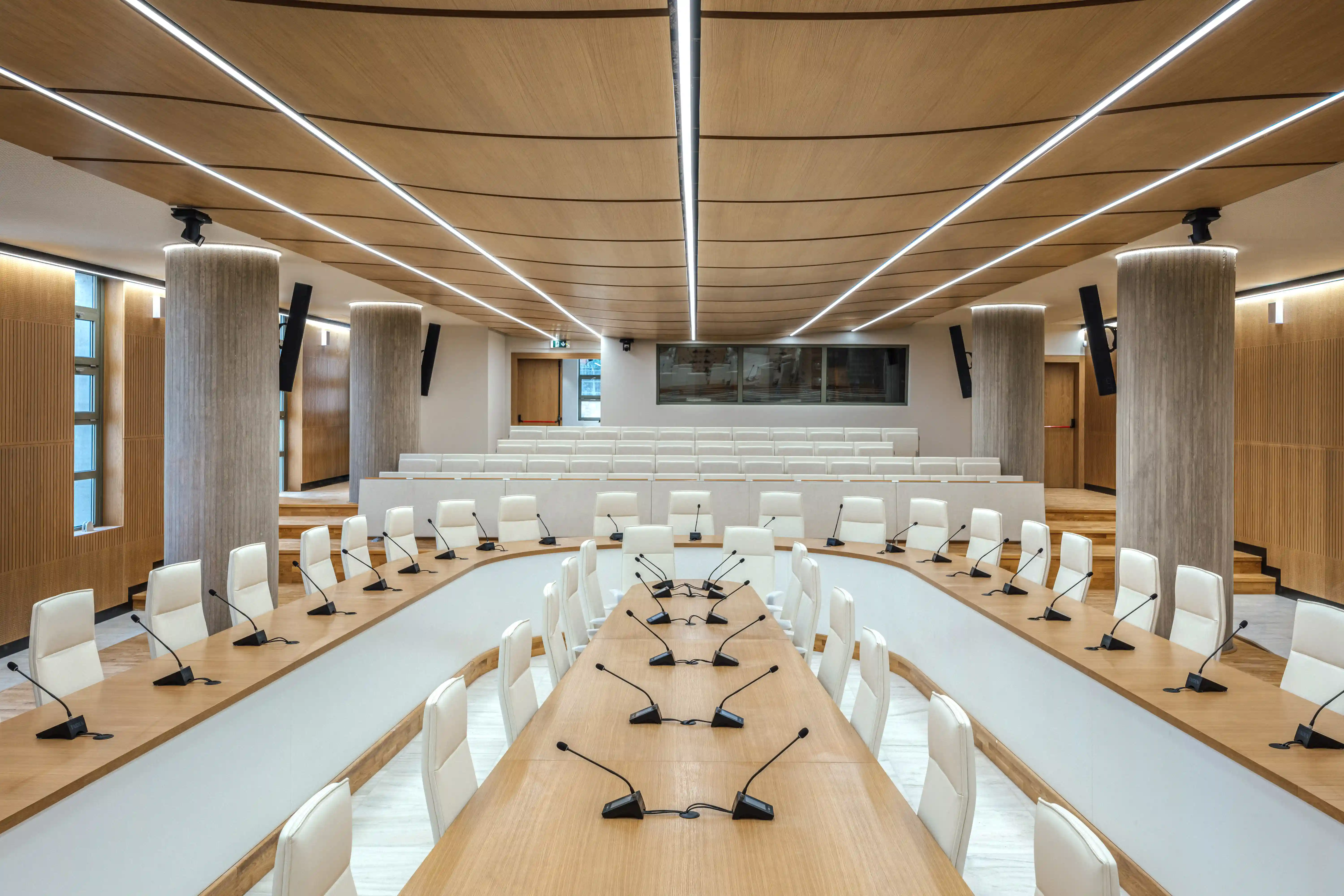
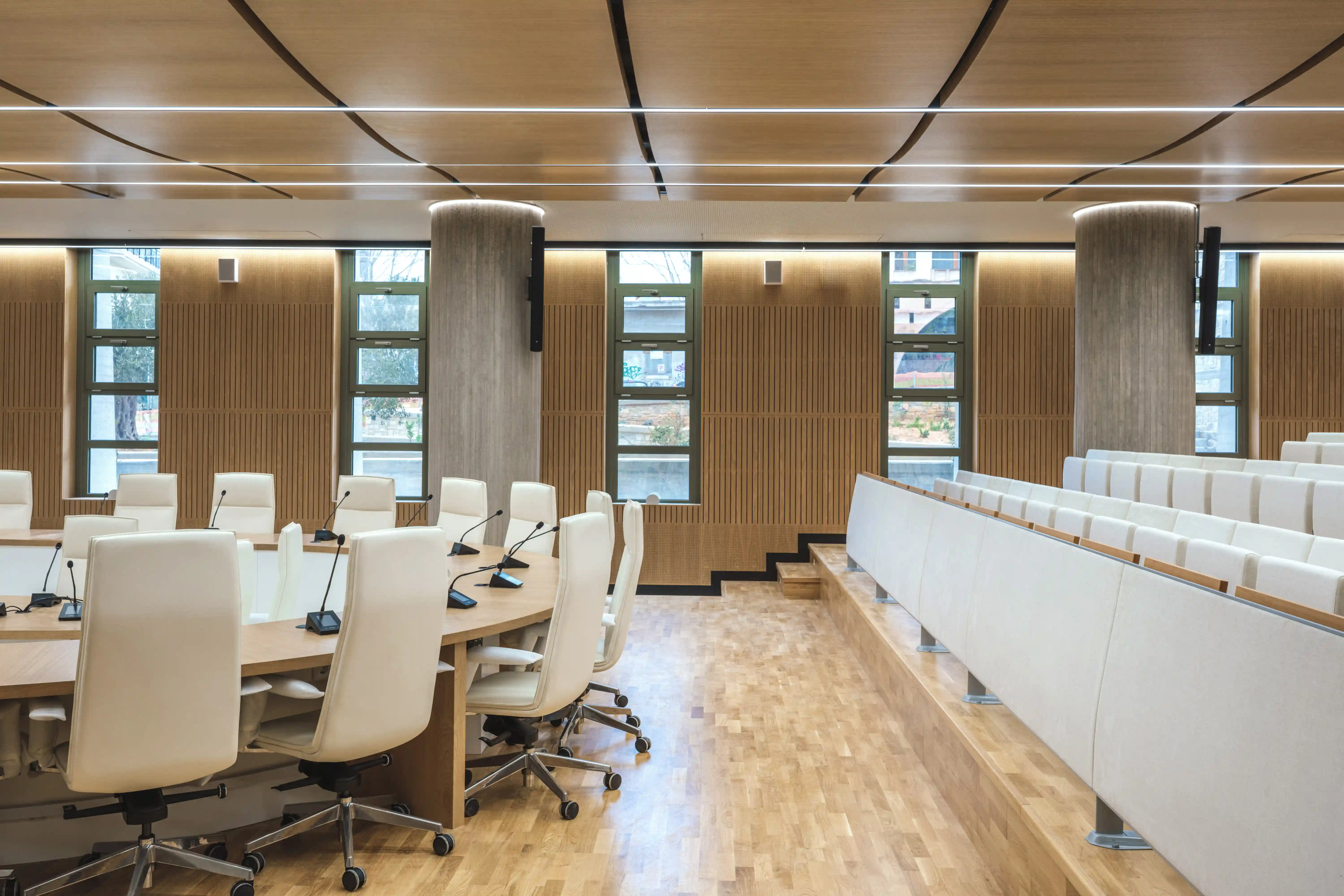
Material articulation shapes the interior environment. Wooden ceiling structures provide acoustic optimization while integrating lighting and spatial rhythm, as exposed technical systems maintain the industrial character of the building. Environmental systems and automated controls support energy efficiency and long-term operational performance.
Transparency becomes an architectural strategy and an institutional gesture. Offices defined by framed glass partitions maintain visual continuity across corridors and workspaces, allowing light and activity to move through the building. Rather than replicating the conventional image of public administration interiors, the project proposes a spatial identity for civic workplaces that pairs institutional solidity with openness, material clarity, and accessibility.
Mechanic engineers: VLACHAKIS IOANNIS, MAKRAKIS GIORGOS
Architect : KARGIANTOULAKIS MANOLIS
Construction company: ATESE S.A.
Electrical supplies – Lighting fixtures: KAYKAS S.A.
Wooden constructions – furniture: TSIGENIS WOODCRAFT
Aluminum frames: ALUMIL S.A.
Sound absorbing panels: AV SYSTEM DESIGN ENGINEERS
Photographer: LOUKIANOS ARNAOUTAKIS